

Ubuntu Health Foundation and Chicago's new civic music.
EDITORIAL DISCLOSURE: The radio host performed at Groovin' For Good twice, the MDW edition and the Juneteenth edition, as part of the duo S!A with his mentee Siine. NoLaces holds the editorial framing independently of that performance relationship.
EDITORIAL DISCLOSURE: The radio host performed at Groovin' For Good twice, the MDW edition and the Juneteenth edition, as part of the duo S!A with his mentee Siine. NoLaces holds the editorial framing independently of that performance relationship.
At 5 PM on Friday June 19, BAR22 at 2244 South Michigan started filling up with people who did not look like they had come for a party.
There were vendors setting up tables along the wall. There were business cards being exchanged before the first drink. There were three DJs warming up the room with amapiano, one of them, me playing in duo called S!A with my mentee Siine. And there was a small printed sign on the bar that read Ubuntu Health Foundation.
The event was called the Amapiano Social Mixer. It was the second installment of a series called Groovin' For Good, the first was during Memorial Day Weekend, the next is already on the calendar. The vendors were Black-owned Chicago small businesses. The networking was intentional. The amapiano was the gathering mechanism.
Most cities have institutions that do parts of this work: health foundations, business chambers, music venues, community centers. Few have institutions that do all of it on the same Friday night.
Ubuntu Health Foundation, founded by Ingiphile Lungile, has been building a Chicago Afro-diaspora arc that doesn't read as an institution from the outside. It reads as a party. It works as public health programming.
I — Ubuntu
In the Nguni Bantu languages, Zulu, Xhosa, Ndebele, Swati, the word ubuntu carries a philosophy that does not translate cleanly into English. The closest version is this: I am because we are. It's a philosophy that has traveled into Nelson Mandela's speeches, into global reconciliation frameworks, into a certain kind of well-worn corporate diversity language. What it means, actually, is harder than the translations make it sound. Personhood is not individual. It is constituted through relationship. You exist in full only in the context of the community that holds you.
When I asked Ingiphile Lungile, the foundation's founder, why she chose it as the name of a health non-profit in Chicago, she didn't reach for the corporate version.
“Ubuntu is the belief that our humanity is bound together, that none of us thrive in isolation. As a South African living in Chicago, I’ve seen how easy it is for people to feel disconnected despite being surrounded by community. And despite the current political climate, Ubuntu is the true essence of our way of life as Southern Africans. We chose the name Ubuntu Health Foundation because our work is about creating healthy spaces where people feel they belong first, knowing that trust and relationships are the foundation for healthier communities.”
The conventional model of public health programming treats health as a problem individuals face and institutions solve. You get sick; you visit a system; the system intervenes. What Ubuntu's model proposes, and what Groovin' For Good enacts on a Friday night, is that health is constituted by the community long before illness arrives. The room is the prescription. The gathering is the intervention. The amapiano is not decoration. It is the mechanism through which people remember that they are not alone in a city that does not always make that easy to feel.
Belonging first, then health. That's the operational premise. It reads as soft on paper. In practice, it's a health foundation whose Friday nights look like parties because the founder understood something about what makes a person actually well.
II — The Format
Every non-profit event I've been to in Chicago runs on the same script: rented ballroom, silent auction, a keynote speaker no one remembers, a table of catered food you could not eat if you were hungry. It's fine. It raises money but it also feels like paperwork.
Groovin' For Good refuses that template. It runs a DJ lineup. It has a vendor showcase built into the room. It's ticketed, but accessibly. It's not marketed as a fundraiser at all — it's marketed as a mixer with a foundation behind it. The mission arrives second, through the room, not through a slide deck.
-
Amapiano, South African in origin, diaspora-coded globally. Amapiano is the genre of slow-building warmth, of community gathering, of a groove that asks you to stay in the room rather than peak and leave. The BPM choice is the design choice.
-
Black-owned Chicago small businesses at every edition. Tabled, present, and part of the room. The vendor showcase is not a side feature. It is a parallel economy running inside the gathering. It is placed right next to the DJ booth.
-
The room is designed for exchange. Business cards before drinks. Introductions before dancing. The social architecture is deliberate, you come to meet people, not just to be in proximity to them.
-
Memorial Day Weekend. Juneteenth Weekend. The holiday pairing is not logistics. It is a claim: the diaspora's holidays are health-programming opportunities, not just party opportunities. The community is already gathering. Ubuntu gives the gathering a frame.
-
Accessibly ticketed, no VIP model, and not a bottle-service-coded room. The economics are consistent with the philosophy: the room is for the community, not for a tier of the community.
Read together, these choices describe an institution. They are just dressed as a Friday.
“Groovin’ For Good is just one part of Ubuntu Health Foundation’s community engagement work. We still host traditional fundraising events like galas, sponsorship dinners, and silent auctions because those serve an important purpose. But community isn’t built in one room. For the African audience especially in Chicago, music is a more natural entry point. It creates a space where people come as themselves, support Black-owned businesses, build new relationships, and connect with our mission in a way that feels genuine rather than transactional. We meet people where they already are, then invite them into something bigger.”
"We meet people where they already are, then invite them into something bigger."
"We meet people where they already are, then invite them into something bigger."
That is the model in one sentence. Every non-profit gala in America has spent the last decade producing spaces where people show up but do not feel arrived. Ingiphile figured out that arrival has to precede invitation.
She went further on why Amapiano specifically:
“Music is one of the few things that can bring strangers into the same room and make them feel like they belong before they’ve even had a conversation. Amapiano, in particular, actually has Chicago roots because of the house music making up most of its foundational makeup. It has also become a global language across the Afro diaspora as it carries joy, nostalgia, pride, and a sense of home for many people. By pairing that energy with local vendors, nonprofits, and opportunities to connect, we’re creating a space where culture becomes the starting point for community. People come for the music, but they leave having supported Black-owned businesses, met someone new, discovered our work, and hopefully feeling a little more connected to the city and to each other.”
That sentence about Amapiano having Chicago roots, through house music, which is Chicago's foundational Black music export — is doing quiet cultural argument work. The genre that came home is running the room that welcomes the diaspora. Amapiano, born in South African townships, built on the harmonic and rhythmic architecture of Chicago house, returning to a Chicago room to fund a Chicago-based health foundation. The circle is not metaphor. It's provenance.
III — The Twin Anchors · MDW + JUNETEENTH
Groovin' For Good has run two editions in 2026. The first was Memorial Day Weekend. The second was Juneteenth Weekend. That is not accident, but the calendar.
Memorial Day Weekend, May 2026. The first Groovin' For Good. The Black American holiday of outdoor gathering, of the beginning of summer, of the year's first long weekend when Chicago's diaspora reclaims the city's lakefront and parks and rooftops simultaneously. Ubuntu held the room that weekend: amapiano, networking, community in a room that knew what it was doing there.
Juneteenth Weekend, June 2026. The second edition. BAR22. The S!A duo, the radio host and his mentee Siine, on the decks alongside N Kwamz and Maasala. The vendors back at the tables. Juneteenth, the federal commemoration of emancipation, the holiday that names what freedom costs and what it has not fully delivered. Ubuntu held the room on that day specifically.
MDW is the Black summer's open. Juneteenth is Black freedom's official commemoration. Together they mark the diaspora's two most charged summer weekends. Ubuntu did not pick them because those weekends have high foot traffic. Ubuntu picked them because those weekends already carry the community's full emotional weight, and the gathering that happens inside that weight is exactly when public health programming is most needed and least visible.
The Juneteenth edition drew about half the attendance of the MDW opener. That could read as decline. Ingiphile read it as clarification.
“The Juneteenth edition actually had about half the attendance of our first event, but it completely changed how I think about success. For the first time, we partnered with other Chicago organizations that were able to connect with new supporters and leave with tangible value beyond the event itself. That felt like just as much of a win as raising funds for Ubuntu Health Foundation.”
“It also reminded me not to get caught up in numbers. Community isn’t measured by how many people walk through the door; it’s measured by the quality of the conversations, the relationships that continue after the music stops, and whether people leave feeling more connected than when they arrived. That’s the kind of impact we’re trying to create with Groovin’ For Good.”
"Community isn't measured by how many people walk through the door."
"Community isn't measured by how many people walk through the door."
That is a heretical sentence in non-profit fundraising, where volume is the reported metric. Ingiphile's version measures the second date — did the relationships continue after the music stopped? Did the vendors get supporters? Did anyone leave more connected than they arrived?
The MDW edition had bigger numbers. The Juneteenth edition had more institutional partnerships and more durable community output. Success re-measured is the whole game in cultural infrastructure.


IV — Ingiphile Lungile.
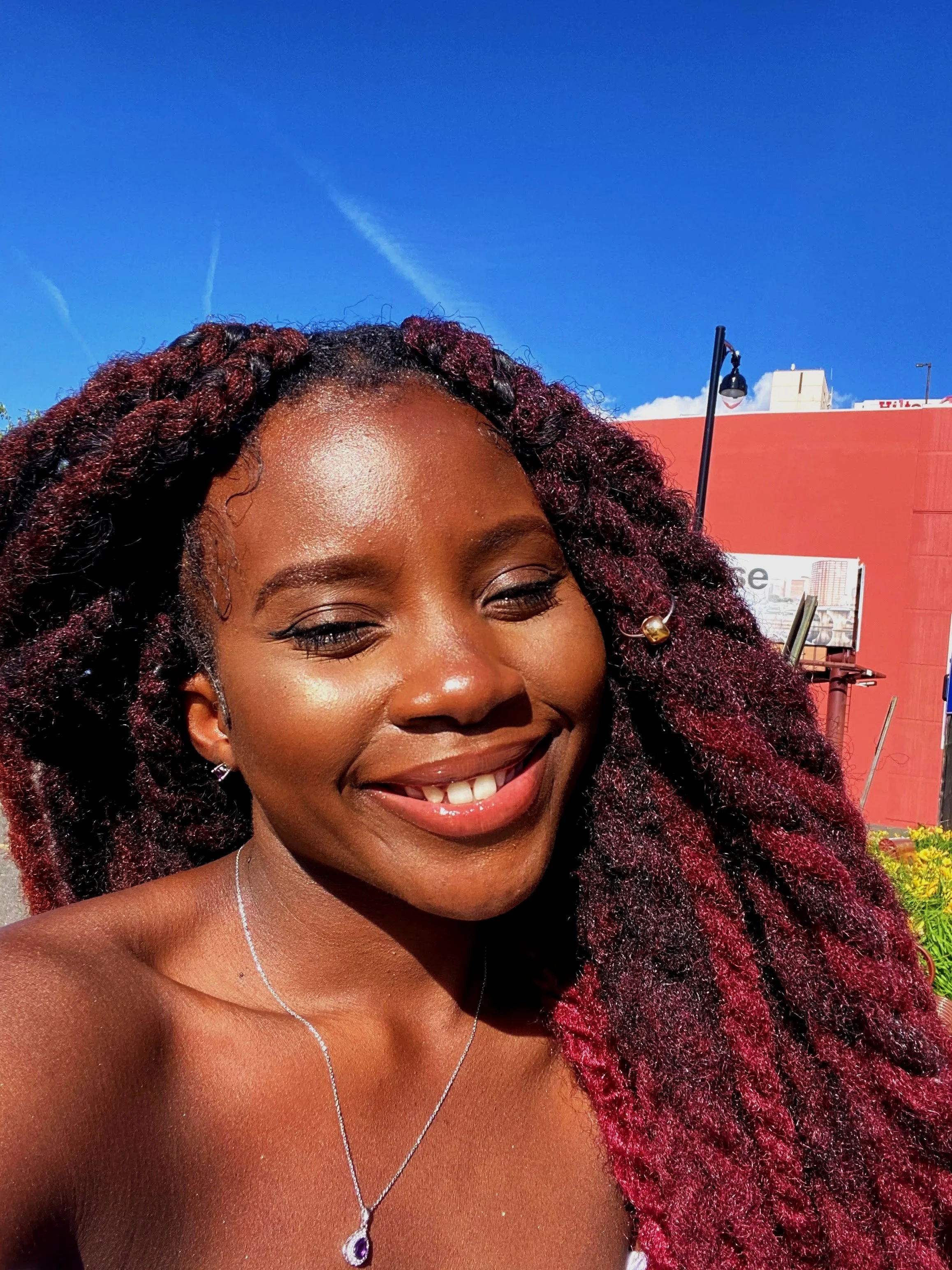
Ubuntu Health Foundation & Groovin’ For Good Founder · @ingiphile_lungile
Ubuntu Health Foundation is Ingiphile Lungile's vehicle. She is the architect of the format, the person who decided that a health foundation should hold its room on a Friday night with amapiano on the decks and Black-owned businesses at the tables. That decision is the creative act behind everything Groovin' For Good has built in 2026.
The Foundation's mission extends beyond the events. Health education, community wellness, diaspora-specific programming, Ubuntu operates in the civic infrastructure gap that exists between what Chicago's official health institutions provide and what Chicago's Afro-diaspora community actually needs. Groovin' For Good is the public-facing expression of that mission. The room you can walk into. The Friday you can attend.
The deeper conversation lives in the Speakeasy Session that accompanies this Reading. What follows here is an introduction, not a profile. The Session is where the argument gets tested in real time, where the founder speaks in her own register, not through the editorial frame of someone who was on the DJ bill.
“Ingiphile Lungile joins NoLaces Radio for a full conversation about Ubuntu Health Foundation, the Groovin’ For Good format, and what Chicago’s Afro-diaspora needs that nobody is building yet. Saturday July 18, 2PM CT at nolacesradio.com.”
V — What This Says About Chicago.
Chicago's Afro-diaspora community has been building institutional infrastructure without institutional support for decades. The Chosen Few Picnic. Howard Street Carnaval. Faaji House and its network of promoters. Sounds by Sa and The Wine Down. The Pregame and BAD. Wild Hare and its rotating Saturday Caribbean brands. Nile Nights Chicago and its Sudanese diaspora debut.
Ubuntu Health Foundation belongs on that list. Groovin' For Good is not an events series masquerading as civic programming. It is civic programming that chose music as the door. The distinction matters because most non-profit programming loses the audience it needs and most party series lose the mission that would make them sustainable. Ingiphile figured out how to keep both.
The city has not named this pattern. The Chicago Afro-diaspora is building institutional infrastructure that does not present as institutional. NoLaces is trying to. This piece is one entry in that longer catalog.
VI — What’s Next.
The next Groovin' For Good is on the calendar for Saturday, July 18 (Girls just wanna Piano: Amapiano vs. Gqom), the same day our first Speakeasy Session launches. We move the conversation from my point of view, and move towards an intimate conversation with the founder, Ingiphile. The Ubuntu Health Foundation continues its work beyond music — galas, sponsorship dinners, silent auctions, the traditional apparatus of a non-profit that also happens to throw the best amapiano series in Chicago.
We come for the music. We stay because we belong there.
The room continues.
Ubuntu Health Foundation · @ingiphile_lungile · Groovin' For Good returns Saturday, July 18 for Girls just wanna Piano: Amapiano vs Gqom..
The record exists now.
We were there.
ACTIIV ADE · NOLACES RADIO · CHICAGO, IL · JULY 2026
-
The Reading
- Jul 15, 2026 GROOVIN' FOR GOOD Jul 15, 2026
- Jul 4, 2026 The Reading · 30 Days Later — better known as, "Change Your Life" Jul 4, 2026
- Jun 10, 2026 Our Playlist Is Human, Too. Jun 10, 2026
-
The Record
- Jul 1, 2026 FREEDOM AT ANCHOR Jul 1, 2026
- Jun 2, 2026 BAD is a Pregame. Jun 2, 2026
- May 29, 2026 Nine Rooms, One Diaspora. May 29, 2026
